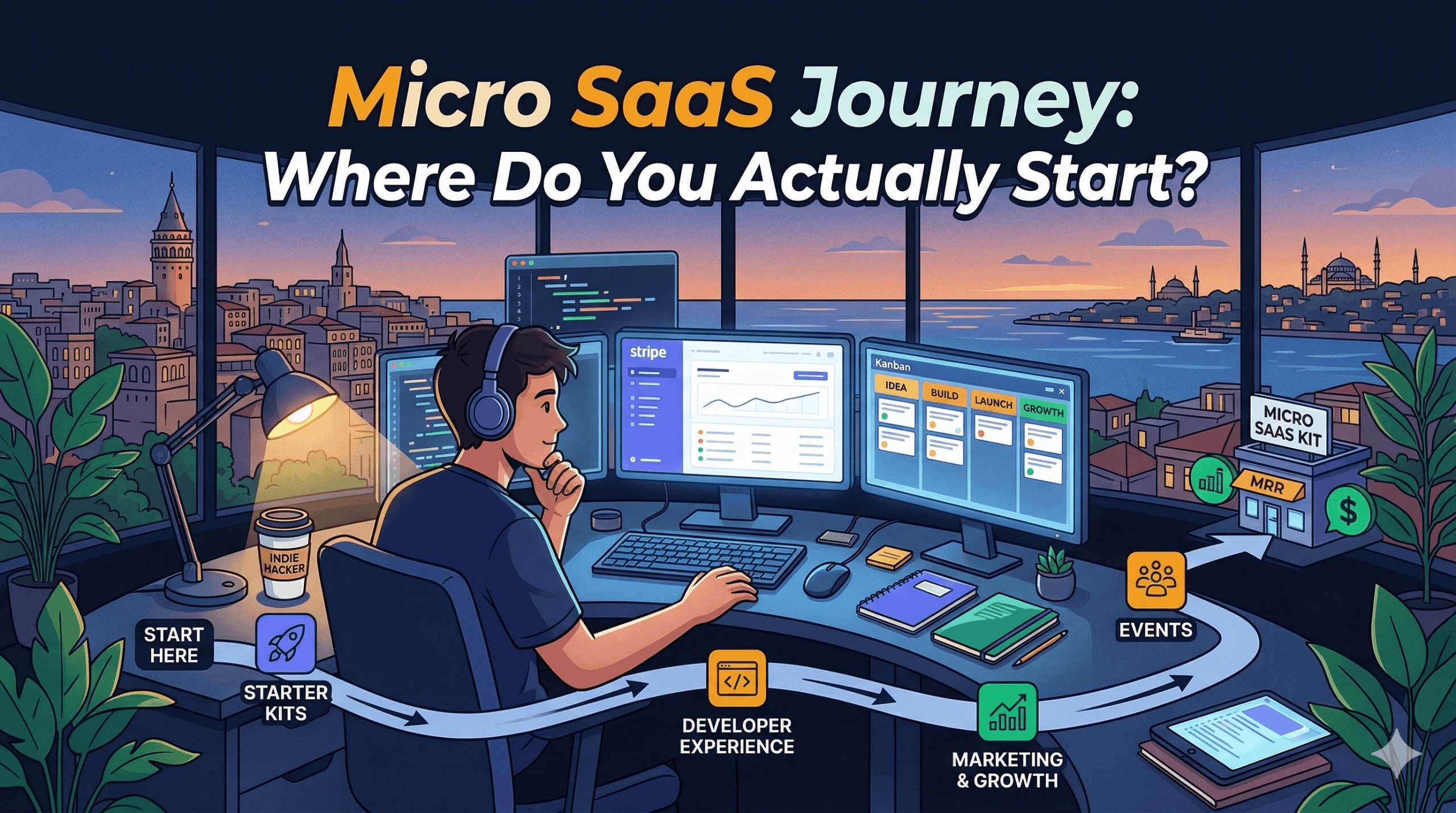
The dream is simple: build a small, automated software tool, solve a specific problem, and watch that sweet monthly recurring revenue (MRR) hit your bank account while you sleep. But if you’ve ever actually tried to launch a Micro SaaS, you know the reality is a bit messier. Between choosing a tech stack, fighting with Stripe integrations, and realizing that “if you build it, they will come” is a lie—it’s easy to get paralyzed before you even write your first line of code.
So, as a solo founder, where do you actually start without losing your mind?
Stop Reinventing the Wheel (The Power of Starter Kits)
The biggest mistake I see developers make is trying to build everything from scratch. You want to build a CRM for dentists? Great. Why are you spending three weeks building a login system and a billing dashboard?
In the Micro SaaS world, speed is your only unfair advantage. This is where Starter Kits (or boilerplates) become your best friend. Your goal isn’t to write the world’s most elegant authentication logic; your goal is to get a working version of your “unique value proposition” in front of real users.
Use a kit that handles the boring stuff—Auth, Database schema, and Stripe—so you can focus on the 20% of your app that actually makes people want to pay you.
DX Matters (Even if You’re a Team of One)
Developer Experience (DX) isn’t just a corporate buzzword for big engineering teams. For a solo founder, it’s a mental health requirement. If your codebase is a mess of undocumented “clever” hacks, you’re going to hate yourself three months from now when you try to add a new feature.
Invest in a tech stack that feels like a superpower, not a chore. Whether it’s the type-safety of TypeScript, the deployment ease of Vercel, or the sheer speed of Go, pick tools that let you move fast without breaking things you can’t fix. A clean DX means you spend less time debugging and more time shipping.
Marketing Isn’t an “Afterthought”
Here’s a hard truth: a mediocre product with great marketing will always outperform a perfect product that nobody knows exists.
You need to think about Marketing & Growth from Day Zero.
- Launch a Waitlist: Don’t wait for a finished product to collect emails.
- Build in Public: Share your wins (and your bugs) on X/Twitter or Indie Hackers.
- Programmatic SEO: Create pages that answer specific “How to” questions related to your niche.
Marketing isn’t about being a “salesperson”; it’s about being a problem solver who happens to have a link to a solution.
Don’t Be a Lone Wolf
Building a Micro SaaS can get lonely. You’re sitting in your home office (or maybe a shared space in Şişhane) staring at a monitor all day. That’s why Events and community are vital.
Whether it’s a virtual demo day, a weekend hackathon, or a local coffee meetup with other founders, getting out of your own head is essential. Talking to people who are at the same stage as you—or a few steps ahead—is often the quickest way to solve a bug or find your first ten customers.
Your first Micro SaaS doesn’t need to be a unicorn. It just needs to solve one tiny problem for a specific group of people who are tired of dealing with it.
Ready to Ship?
At Micro SaaS Kit, we’ve lived through the “blank screen” phase and the “why isn’t anyone signing up?” phase. We built this platform to give you the shortcuts we wish we had.
Whether you need a rock-solid Starter Kit to launch tonight or the Marketing tools to find your first users, we’ve got your back.